If the legends are to be believed, Kerala was founded by Lord Parshuram, an incarnation of Lord Vishnu. He yanked his axe into the Arabian Sea in sorrow that was brought by the meaningless devastation and brutality that he had created on the Kshatriyas in a war. It is said that he had offered harsh penance somewhere on the Western Ghats. The culture of the people of Kerala is largely influenced by its tradition and history. The state of Kerala has always been one of the most amicable and sophisticated in India. It has been a melting point of the cultures of the countries of the Orient and the Occident.
Popular for its spice market, Kerala was flanked by ships from all the continents to collect the excellent-quality spices and becomes rich by selling them. It is even believed that in the ancient Rome, the statesmen used to reprimand their citizens for showing-off their wealth from Kerala. This south Indian state has a unique assorted culture with a strong religious base.
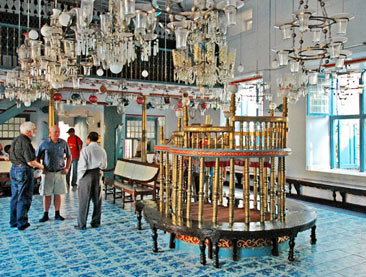
During the BC’s, when the Jews were made to leave central Asia, they arrived in Kerala. This was the time when St. Thomas, one of the 12 apostles of Jesus came here and was surprised to see the level of religious liberty that was given to its people. In 52 AD, he also founded a church in Kerala. At that time, there was no church even in Constantinople. That is not when Islam was founded by the prophet Muhammad, the people of Kerala held it too.
It is believed that the name Keralam or Kerala is a combination of 2 words- ‘kera’ and ‘alam’. The world Kera means coconut and alam means location or land, which means ‘The Land of Coconut Trees’. The culture of this south Indian state is a mixture of Aryan and Dravidian cultures, that had developed and mixed for past many centuries, which also had influences from the other regions of India and even abroad.
Kerala has always shown tolerance for cultural values. Unity and brotherhood have been a part of the nature of the state. In a broad sense, Kerala has always held tight the greatest of achievements in every part of life. It is not wrong to say that the culture of Kerala is an embodiment of the efforts and the triumph of its people in various fields such as language and literature, education and learning, social and economic organization, religion, philosophy, and art and architecture.